
How Does CBD Act on the Brain? – CBD Guide
Introducción
For some years now, CBD has attracted growing interest among people looking for natural alternatives for wellbeing. But beyond the general enthusiasm, what is really known about how this compound interacts with the brain? In this article we explore what two key scientific studies say about the effects of cannabidiol on the brain, and we explain some of the more complex scientific terms that come up when talking about the effects of CBD.
The relationship between CBD and the nervous system
Cannabidiol (CBD) is one of the main compounds in cannabis, but unlike THC, it does not produce psychoactive effects or alter perception. This does not mean it has no effect on the brain. In fact, its action is broad and complex: it influences the activity of various brain regions and is involved in processes related to mood, memory, fear perception and neuronal excitability. Its impact is subtler than that of THC, but no less relevant for that.
Studies such as those by Schouten et al. (2024) and Martin-Santos et al. (2009) have helped to better understand this relationship, analysing how brain activity changes after CBD is administered and which mechanisms could be behind its effects.
Mecanismos de acción del CBD a nivel cerebral
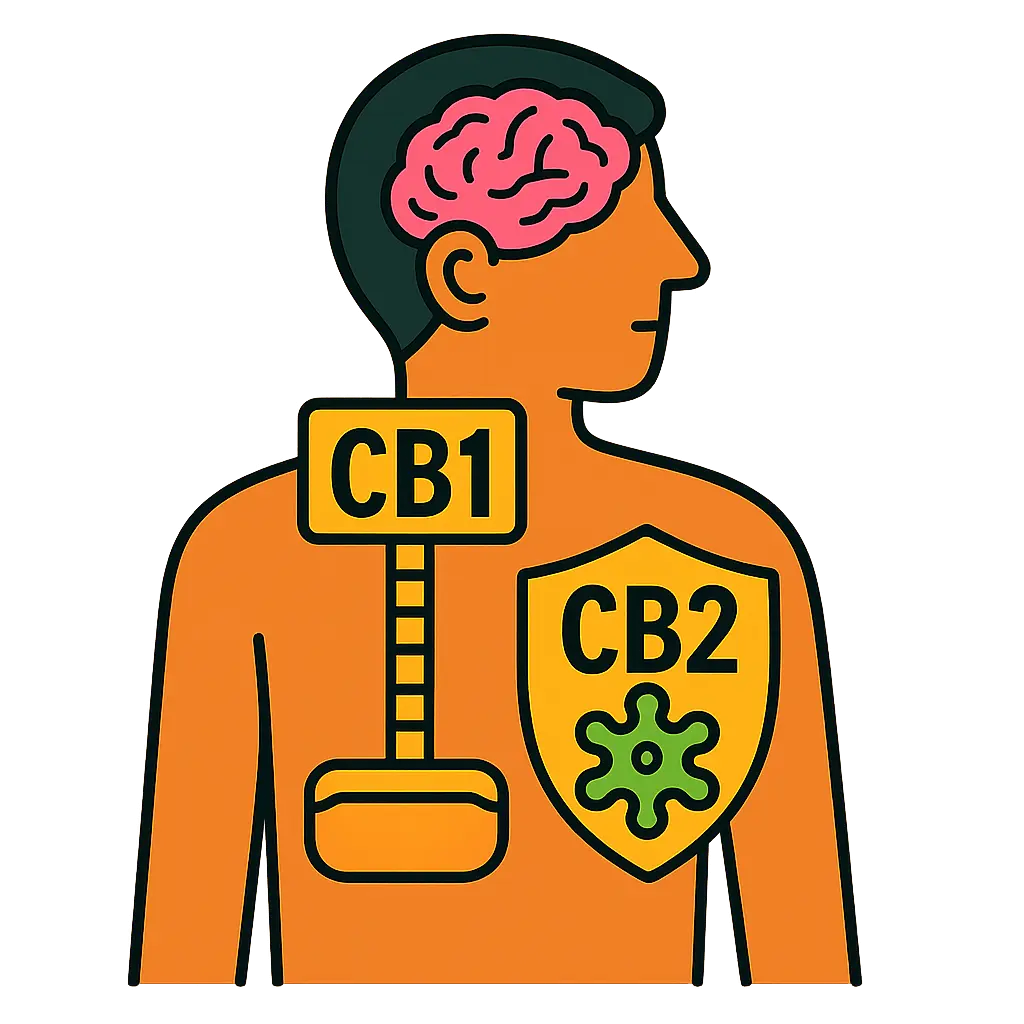
To understand how CBD acts in the brain, we first need to talk about two key elements: the CB1 and CB2 receptors. These receptors are part of the endocannabinoid system, a communication system that the human body has built in and that helps regulate many functions: from how we feel pain and hunger to how we sleep or respond to stress. You can imagine receptors as locks, and cannabinoids such as THC as keys that fit into them.
The CB1 receptor is found mainly in the brain and central nervous system. It is the one most closely linked to the mental or emotional effects of cannabis, such as changes in mood, perception or memory. THC, for example, binds easily to this receptor, which is why it can produce intense sensations such as euphoria or anxiety, as well as psychoactive effects.
The CB2 receptor, on the other hand, is more present in the immune system and peripheral tissues, and is linked to processes such as inflammation or the immune response.
However, CBD does not bind directly to these receptors as THC does. Instead, it modulates their activity indirectly. It is as if CBD did not use the lock, but still moved something in the door that makes it work differently. This allows it to have effects on the brain without altering consciousness or causing strong sensations, while still influencing how the body regulates its internal balance.
Acción como modulador alostérico y efecto sobre el THC
One of the most interesting effects of CBD is its role as a “negative allosteric modulator” of the CB1 receptor. In other words: it does not activate it directly, but it changes the way it responds to other substances, such as THC. This can result in a reduction of the psychoactive or anxiety-inducing effects that THC sometimes produces. That is why CBD has been studied as a possible “counterweight” within cannabis itself, helping to soften the experience when both compounds are present (Schouten et al., 2024).
Inhibición de la degradación de anandamida
Another key mechanism is its relationship with a natural molecule called anandamide, which the body produces itself and which plays an important role in pleasure, calm and motivation. CBD prevents this molecule from breaking down quickly, allowing it to remain active in the brain for longer. As a result, it may help to prolong feelings of wellbeing and emotional balance, without altering your state of consciousness.
Más allá del sistema endocannabinoide: otros receptores clave
Receptores 5-HT1A (relacionados con la serotonina)
One of these receptors is connected to serotonin, a substance you have probably already heard of because it has a big influence on mood, sleep and anxiety. It has been observed that CBD can gently stimulate this type of receptor, which translates into a calming effect. This is similar to what some anxiety medications do, but through a different pathway and without producing psychoactive effects (Schouten et al., 2024).
Receptores TRPV1 (dolor, temperatura e inflamación)
Researchers have also studied how CBD acts on a type of receptor called TRPV1, which is related to the way we perceive pain and changes in temperature. This type of receptor is activated, for example, when we feel something very spicy or very hot. By interacting with it, CBD could help calm certain pain signals or discomfort associated with inflammation (Schouten et al., 2024).
Receptores PPAR-γ y A2A (procesos celulares)
CBD also influences deeper processes at cellular level that are essential for brain health. These include protection against oxidative stress (the damage that molecules called free radicals can cause) and the regulation of prolonged inflammation. These effects occur thanks to its interaction with receptors such as PPAR-γ and A2A, which you could imagine as cellular switches that help maintain internal balance, especially when the body is facing wear or damage (Schouten et al., 2024).
Efectos del CBD en el cerebro humano
So what really happens in your brain when you take CBD? This question has prompted a series of studies using technologies such as functional magnetic resonance imaging and positron emission tomography. Thanks to them, it has been possible to observe how brain activity changes after this compound is administered.
One of the most consistent effects observed in neuroimaging studies is reduced activity in the amygdala and the hippocampus. These two areas of the brain are closely linked to how we perceive fear, how we react to stress and how we store emotional memories. According to the findings of Martin-Santos et al. (2009), this modulation helps explain why so many people describe a feeling of emotional relief or greater mental clarity after taking CBD.
The same study observed something else: an increase in activity in the parahippocampal gyrus. This term may sound technical, but this area of the brain is involved in how we remember our experiences and how those memories make us feel. By becoming more active with CBD, it may help those memories to be experienced in a gentler, less intrusive way, helping to balance our emotions.
Además, el estudio registró una disminución de la actividad en la corteza cingulada posterior. Esta región suele activarse cuando nos quedamos atrapados en pensamientos repetitivos o negativos. Seguramente te ha pasado: una idea da vueltas y vueltas en la cabeza sin dejarte avanzar. Pues bien, se cree que el CBD ayuda a interrumpir ese patrón, como si ofreciera una especie de pausa mental. Es por eso que algunos expertos consideran que puede actuar como un freno natural frente a la rumiación (Martín-Santos et al., 2009).
Finally, Schouten et al. (2024) explain that CBD appears to influence what they call “cortical excitability”, which basically refers to how active your neurons are in their normal state. If this activation is too high, the brain may overreact to everyday stimuli. Here, CBD could act as a stabiliser, keeping that level of activity within healthy margins. It would do so through its interaction with receptors such as TRPV1 and systems such as GABA, which act as natural regulators of the brain’s electrical activity.
Taken together, these findings help to better understand how CBD can produce a calming effect. It is not just about feeling relaxed, but about several brain regions synchronising in a more balanced way, making a calmer, clearer state of mind easier to reach.
Various human studies have indicated that CBD appears to have an anxiolytic effect, meaning it could help reduce anxiety. This has been observed both in behavioural tests and in neuroimaging studies, where some people showed lower brain activation in response to intense emotional stimuli, such as fearful faces, after it was administered (Martín-Santos et al., 2009; Schouten et al., 2024).
This reduction in emotional reactivity suggests that CBD could be acting on the brain’s “alarm system”, helping to make the stress response more measured. It has also been observed that this compound acts on regions such as the amygdala and the cingulate cortex, areas directly related to emotional management. Taken together, these findings open up an interesting line of exploration into how CBD could provide tools to better cope with everyday stress.
In the medical field, CBD has been approved in some countries as a complementary treatment for specific types of epilepsy that do not respond easily to other drugs. This decision is based on clinical studies that have documented its effect on neuronal hyperexcitability, a condition in which the brain responds with uncontrolled electrical activity. The mechanism behind this possible benefit is linked to its interaction with receptors such as GABA, which help inhibit the overexcitation of neurons, and with certain ion channels that regulate electrical transmission between brain cells (Schouten et al., 2024).
Although this use is already regulated in very specific contexts, appropriate medical follow-up remains essential, bearing in mind that its effects may vary depending on the type of epilepsy and each patient’s profile.
One of the most recent lines of research on CBD concerns its possible antipsychotic effect. Some preliminary studies have observed that this compound could help reduce certain symptoms associated with psychotic disorders, such as hallucinations or disorganised thinking, particularly those caused by THC (Schouten et al., 2024). These effects have been studied in carefully controlled clinical settings and, although the results are promising, its use in these cases cannot yet be generalised without a specialist medical assessment. It has been proposed that CBD acts on neurotransmitters such as dopamine and modulates brain regions such as the prefrontal cortex and the limbic system, both related to perception, judgement and emotional balance.
It is important to stress that this field is still developing. Scientists continue to evaluate the scope and limitations of these possible effects, and any clinical use in this context must be supervised by mental health professionals. Even so, these early findings have opened a valuable door for future research into the role of CBD in regulating complex disorders such as schizophrenia.
Propiedades neuroprotectoras del CBD
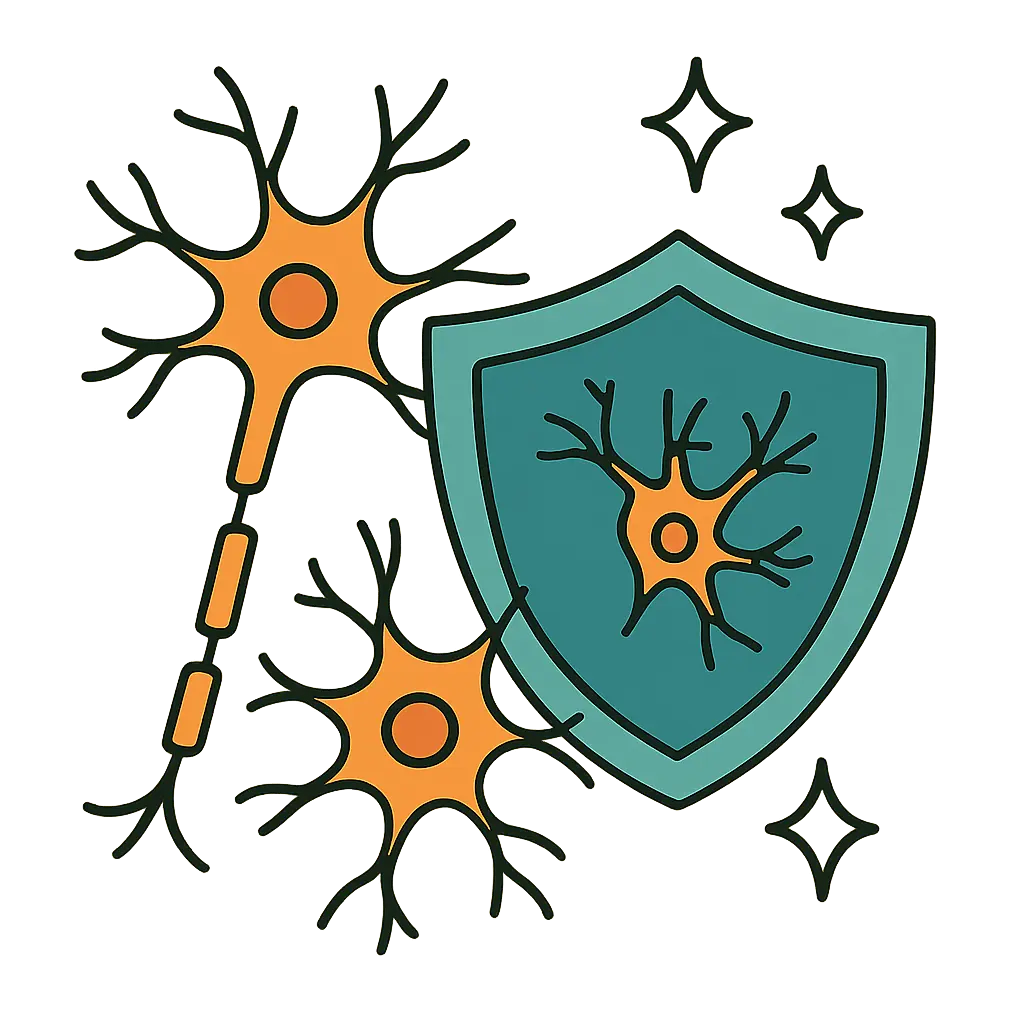
Beyond its immediate effects, CBD has shown qualities that could protect the brain in the long term, known as a neuroprotective effect. This action is based on several properties confirmed in recent studies.
Efectos antioxidantes y posibles aplicaciones en enfermedades neurodegenerativas
On the one hand, it has been observed that CBD may have antioxidant effects, meaning it helps neutralise free radicals: small, unstable molecules that can damage cells over time. This ability is relevant for the brain because oxidative stress, that is, an excess of free radicals, is involved in cellular ageing and in degenerative diseases such as Alzheimer’s or Parkinson’s (Schouten et al., 2024; Martín-Santos et al., 2009).
Protección contra el daño neuronal inducido por estrés oxidativo
In addition, CBD interacts with receptors such as PPAR-γ and A2A, which are linked to regulating inflammation and protecting neurons under conditions of prolonged stress. This includes situations such as head injuries, hypoxic damage or even low-grade inflammatory processes sustained over time.
By also inhibiting the breakdown of endocannabinoids such as anandamide, CBD helps maintain the stability of the brain’s chemical environment. All this suggests that its use could play not only a symptomatic role, but also a preventive one in some clinical contexts (Schouten et al., 2024). Although research is still ongoing, these findings offer a promising basis for exploring applications of CBD in neurodegenerative diseases or in protecting cognitive function in the long term.
Posibles beneficios del CBD en el cerebro
After learning how CBD acts in different regions of the brain and its possible protective role, it is natural to ask: how do all these effects translate into tangible benefits for mental wellbeing? In this section we explain in simple terms the most explored uses of CBD in relation to emotional and neurological health.
What do we still need to learn about CBD and the brain?
Despite all these promising findings, many questions remain open. Most of the available studies have worked with small samples, and there are methodological differences that make it difficult to draw definitive conclusions. Doses, routes of administration and the profiles of people who could benefit most from CBD also need to be established more precisely. That is why experts agree that more large-scale clinical trials are needed to firmly confirm what is already being observed in more controlled settings.
If you have ever wondered whether CBD could help you, science is still building the answers. But what we already know is enough to consider that its action in the brain is real, complex and worth exploring seriously and with an open mind.

David Vázquez
Head Ecommerce Sector CBD desde hace más de 10 años

Referencias
- Martín-Santos, R., Fagundo, A., Crippa, J. A., Atakan, Z., Bhattacharyya, S., Allen, P., Fusar-Poli, P., Borgwardt, S., Seal, M., Busatto, G. F., & McGuire, P. (2009). Neuroimaging in cannabis use: A systematic review of the literature. Psychological Medicine, 40(3), 383–398. 10.1017/S0033291709990729.
- Schouten, M., Dalle, S., Mantini, D., & Koppo, K. (2024). Cannabidiol and brain function: Current knowledge and future perspectives. Frontiers in Pharmacology, 14. 10.3389/fphar.2023.1328885
SOUTHERN PHARMA SPAIN S.L. assumes no liability for the use by third parties of the content of the website and may exercise all civil or criminal actions that apply in case of infringement of these rights by the user. It is absolutely forbidden to use the website or any of its elements for illicit purposes. The benefits and properties of CBD that could be read on the website www.gorillagrillz.com, in no case are attributed to the products sold on the website. CBD products are not medicines and should not replace treatments with these. What you can read on our website are not official medical statements but references to preclinical studies. If you have any doubts, you can consult with a health professional. We remind you that in Spain CBD products are for topical use. All products have THC<0.2% analytics in accordance with Royal Decree 1729/1999.