
CBD for topical use

Introducción
The use of CBD in topical products such as creams, balms or oils has gained ground in the world of personal care thanks to its ability to act directly on the skin. Unlike other methods of administration, topically applied CBD does not enter the bloodstream. This allows its effects to remain localised, acting right where they are needed. Let us look at what studies say about this way of applying CBD and its potential benefits.
How does topical CBD work and why apply it to the skin?
The key to this localised action lies in the endocannabinoid system, a network of receptors present throughout the body, including the epidermis. These receptors (especially the so-called CB2 receptors) perform essential functions: they regulate inflammation, modulate the immune response, and take part in cell regeneration and sebum production. When we apply a product with CBD, it interacts with these receptors in the skin, supporting the natural balance of the treated area.
The most interesting thing is that this interaction takes place without altering your state of mind or causing unwanted side effects. CBD is not psychoactive, and in cosmetic and therapeutic formulations it almost always comes from hemp, a variety of cannabis with a low THC content. This makes it a safe and versatile option, both for sensitive skin and for skin that needs relief from irritation, redness or inflammatory breakouts.

Potenciales beneficios del CBD tópico según la evidencia científica
Growing interest in CBD as an ingredient in skincare products has driven numerous studies seeking to better understand its effects. Although many findings are still at a preliminary stage, the available evidence suggests that this natural compound could offer a range of benefits. Below, we explore some of the most notable ones.
Inflammation is a natural and necessary process in the body: it acts as a defence response to damage or external agents. However, when it becomes excessive or chronic, it can lead to redness, irritation and a wide variety of skin conditions. In this context, research such as that by Tijani et al. (2021) has pointed out that CBD modulates this response at cellular level without blocking it completely. In other words, it can help calm dysregulated inflammatory activity without interfering with the body’s natural protection and repair mechanisms. This ability makes it a promising ingredient for soothing reactive skin, reducing inflammatory breakouts and supporting the treatment of inflammatory skin conditions without harsh effects. In addition, according to some studies, this same anti-inflammatory effect could have applications beyond skincare, even helping to relieve muscle inflammation (Alpy et al., 2023) (Rojas-Valverde & Fallas-Campos, 2023).
CBD applied to the skin has also been studied for its possible ability to relieve localised pain. In a study of former athletes who used a CBD cream for several weeks, many participants reported a significant reduction in pain, as well as feeling more able to carry out their everyday activities. Some mild side effects were also recorded, such as dryness or skin irritation, which disappeared quickly (Hall et al., 2020). In addition, another recent study in people with neuropathic pain found similar results: after using a CBD cream, most reported improvements in pain sensation and good tolerance of the product (Xu et al., 2023). Although the results are promising, more research is still needed to confirm its effectiveness in different contexts.
Well-hydrated skin performs its protective barrier function better. In this respect, CBD has shown potential to improve water retention in the epidermis. A group of researchers (Ikarashi et al., 2021) found that cannabidiol could stimulate the production of aquaporin-3 (AQP3), a protein essential for transporting water within skin cells. Thanks to this mechanism, CBD could help keep skin soft, supple and protected against dryness, without resorting to occlusive ingredients that can overload combination or oily skin.
The healing process requires a delicate balance between inflammation, cell repair and tissue regeneration. In this context, Parikh et al. (2024) have documented that CBD could speed up wound closure, reduce initial inflammation and limit excessive scarring, possibly thanks to its action on CB2 receptors. These findings open the door to its potential use in improving scars from injuries, surgical procedures or even cosmetic ones, such as tattoos.
One of the key factors in the development of acne is excessive sebum production. Research such as that by Ferreira et al. (2024) has explored how CBD could reduce this production by acting on sebocytes, the cells responsible for producing oil in the skin. In addition, its complementary anti-inflammatory effect could reduce the irritation associated with breakouts. This positions CBD as a possible ally in the treatment of acne, with the potential for fewer adverse effects than some conventional pharmacological treatments.
Acne is also linked to the proliferation of Cutibacterium acnes, a bacterium that can aggravate inflammatory breakouts. Some researchers have suggested that CBD has antimicrobial properties capable of reducing the presence of this bacterium on the skin (Peyravian et al., 2022). Although more clinical research is needed, this action could strengthen the use of CBD in specific formulations for acne-prone skin or for other bacteria-related conditions.
CBD oils are one of the most versatile and concentrated forms of skin application. They usually contain specific percentages of cannabidiol, which allows precise dosing and adjusting the amount to the desired level of intensity. This format is ideal for those looking for a simple option that can be applied directly to specific areas and combined with other routines or products.
Beyond their concentration, some oils are specially formulated for massage. These versions usually include complementary ingredients such as essential oils or botanical extracts that enhance the feeling of relaxation. Using CBD in this format allows the compound to be absorbed slowly as the skin is massaged, turning self-care into a complete sensory moment. Massages not only make the most of the potential of CBD, but are a relaxing experience in themselves, with their own benefits.
CBD creams and balms combine this compound with moisturising, nourishing and protective ingredients. Their thicker texture allows even application, ideal for large areas or areas that need special care. Many of these formulations include components such as shea butter or essential oils, which enrich their possible benefits and broaden their potential. In addition, as they are more elaborate cosmetic products, they are often adapted to specific needs such as tattoo care, scars or sensitive skin.
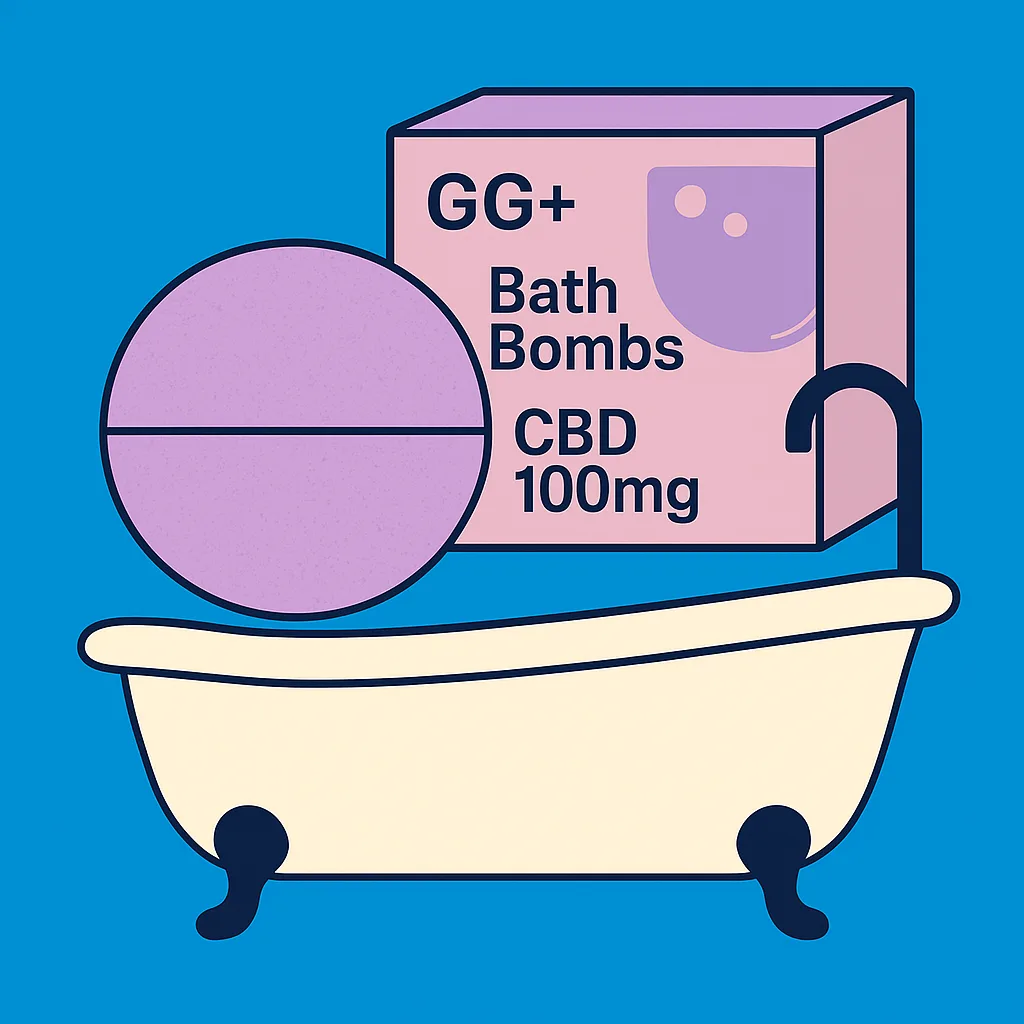
For those who enjoy self-care rituals, CBD bath bombs offer a simple and pleasant way to include this ingredient in their routine. As they dissolve in the water, they release cannabidiol along with natural scents and extracts that turn your bath into a spa-like experience. This format requires no extra steps or application techniques, making it an ideal option for those looking for a moment of relaxation while encouraging gradual absorption of CBD through prolonged contact with the skin.
CBD has become an increasingly common ingredient in daily skincare products. Thanks to its moisturising and antioxidant properties, it may help keep the skin balanced and protected against dryness or redness. Applying it in oils, creams or balms can support a gentler routine, especially for sensitive skin or skin prone to irritation.
During the healing process of tattooed skin, and also in its long-term maintenance, CBD has the potential to help with deep hydration, reduce discomfort and preserve colour. When included in formulas designed for this purpose, it could help soothe the treated area and support a more comfortable recovery, always as part of comprehensive care that respects the skin’s natural timing.
It has been suggested that CBD, through its action on dermal receptors, could play a role in skin regeneration and repair processes. This makes it an ingredient of interest in scar care products, where it could help improve the appearance of the skin over time, smoothing uneven textures and reducing redness. Some studies have even used it for the care of surgical scars, so its potential in this area is significant.
In a physical context, topical use of CBD could have beneficial effects before or after exercise. Added to massage oils or to cooling or warming creams, it could help relieve muscle tension, reduce specific aches and promote a general feeling of rest. Although it does not replace any medical or physiotherapy measure, it can also be part of a self-care routine for aches and injuries.
Various studies have explored the potential of CBD as support for some dermatological conditions. In the case of acne, for example, it has been observed that it could help reduce inflammation and modulate sebum production, which would help improve the condition of the skin. Its application in other conditions such as atopic dermatitis or psoriasis has also been investigated, although the evidence is still preliminary. It is essential to remember that CBD should not be considered a substitute for therapies prescribed by experts, and any inclusion in therapeutic and medical treatments must be done under professional supervision.
¿Cómo puede ayudar usar CBD en la piel?

Recent research has identified potential anti-inflammatory, antioxidant and moisturising properties in CBD. These effects could benefit conditions such as dryness, redness or even imbalances related to more complex skin conditions, although more clinical studies are still needed to confirm this conclusively.
In short, topical CBD offers a localised approach to skincare. It does not alter consciousness, does not enter the circulatory system and acts directly on the dermal receptors that regulate key processes in the skin.
Formas de aplicar CBD sobre la piel: presentaciones y productos
CBD comes in a wide variety of topical products, and each format offers a different experience. From concentrated oils to fizzy bath bombs, the way it is applied can influence how its effects are perceived and at what time of day it is most convenient to use. Choosing the right product depends not only on the expected benefits, but also on the type of application, the desired texture and the level of absorption you are looking for.
¿Es seguro usar CBD en la piel?
In general, topical use of CBD is considered safe and well tolerated, especially when applied in moderate concentrations. However, as with any personal care product, it is important to choose quality options that clearly state the amount of CBD and the ingredients in the formula. Although the studies reviewed in this article show good levels of skin tolerance, every skin is different. So if you have any doubts or a specific condition, it is best to consult a professional. It is also advisable to do a patch test on a small area before adding a new product to your routine, even if it is a natural formula, to prevent possible reactions.
Now that you know how topical CBD works, its possible benefits and the different ways to apply it, you can consider using it as part of your personal care routine in an informed way. With growing research and constant improvements in formulations, topical CBD is shaping up to be an increasingly valuable tool for everyday wellbeing and mindful skincare.
Usos del CBD tópico: aplicaciones específicas
The versatility of CBD applied to the skin has led to its inclusion in a variety of personal care routines. From everyday skincare to scar care, this natural compound could offer benefits in a range of specific situations.

David Vázquez
Head Ecommerce Sector CBD desde hace más de 10 años

Referencias
- Alpy, A., Yusuff, G., Simpson, T., Dpt, J. P., Dpt, M. A., PhD, R. O., & Wygand, J. (2023). Topical Cannabidiol and the Progression Rate of Delayed Onset Muscle Soreness. International journal of exercise science, 16(3), 1426–1439.
- Atalay, S., Jarocka-Karpowicz, I., & Skrzydlewska, E. (2019). Antioxidative and Anti-Inflammatory Properties of Cannabidiol. Antioxidants (Basel, Switzerland), 9(1), 21. https://doi.org/10.3390/antiox9010021
- Blebea, N. M., Pricopie, A. I., Vlad, R. A., & Hancu, G. (2024). Phytocannabinoids: Exploring Pharmacological Profiles and Their Impact on Therapeutical Use. International journal of molecular sciences, 25(8), 4204. https://doi.org/10.3390/ijms25084204
- Ferreira, I., Lopes, C. M., & Amaral, M. H. (2024). Treatment Advances for Acne Vulgaris: The Scientific Role of Cannabinoids. Cosmetics, 11(1), 22. https://doi.org/10.3390/cosmetics11010022
- Hall, N., James, B., Bhuiyan, M. A. N., Crane, E., Falgout, C., & Murnane, K. S. (2023). Topical cannabidiol is well tolerated in individuals with a history of elite physical performance and chronic lower extremity pain. Journal of cannabis research, 5(1), 11. https://doi.org/10.1186/s42238-023-00179-8
- Ikarashi, N., Shiseki, M., Yoshida, R., Tabata, K., Kimura, R., Watanabe, T., Kon, R., Sakai, H., & Kamei, J. (2021). Cannabidiol Application Increases Cutaneous Aquaporin-3 and Exerts a Skin Moisturizing Effect. Pharmaceuticals (Basel, Switzerland), 14(9), 879. https://doi.org/10.3390/ph14090879
- Palmieri, B., Laurino, C., & Vadalà, M. (2019). A therapeutic effect of cbd-enriched ointment in inflammatory skin diseases and cutaneous scars. La Clinica terapeutica, 170(2), e93–e99. https://doi.org/10.7417/CT.2019.2116
- Parikh, A. C., Jeffery, C. S., Sandhu, Z., Brownlee, B. P., Queimado, L., & Mims, M. M. (2024). The effect of cannabinoids on wound healing: A review. Health science reports, 7(2), e1908. https://doi.org/10.1002/hsr2.1908
- Peyravian, N., Deo, S., Daunert, S., & Jimenez, J. J. (2022). The Anti-Inflammatory Effects of Cannabidiol (CBD) on Acne. Journal of inflammation research, 15, 2795–2801. https://doi.org/10.2147/JIR.S355489
- Rojas-Valverde, D., & Fallas-Campos, A. (2023). Cannabidiol in sports: insights on how CBD could improve performance and recovery. Frontiers in pharmacology, 14, 1210202. https://doi.org/10.3389/fphar.2023.1210202
- Tijani, A. O., Thakur, D., Mishra, D., Frempong, D., Chukwunyere, U. I., & Puri, A. (2021). Delivering therapeutic cannabinoids via skin: Current state and future perspectives. Journal of Controlled Release, 334, 427-451. https://doi.org/10.1016/j.jconrel.2021.05.005
Xu, D. H., Cullen, B. D., Tang, M., & Fang, Y. (2020). The Effectiveness of Topical Cannabidiol Oil in Symptomatic Relief of Peripheral Neuropathy of the Lower Extremities. Current pharmaceutical biotechnology, 21(5), 390–402. https://doi.org/10.2174/1389201020666191202111534
SOUTHERN PHARMA SPAIN S.L. assumes no liability for the use by third parties of the content of the website and may exercise all civil or criminal actions that apply in case of infringement of these rights by the user. It is absolutely forbidden to use the website or any of its elements for illicit purposes. The benefits and properties of CBD that could be read on the website www.gorillagrillz.com, in no case are attributed to the products sold on the website. CBD products are not medicines and should not replace treatments with these. What you can read on our website are not official medical statements but references to preclinical studies. If you have any doubts, you can consult with a health professional. We remind you that in Spain CBD products are for topical use. All products have THC<0.2% analytics in accordance with Royal Decree 1729/1999.